

Finding the best photographer for your commercial project isn't about scrolling through the first page of search results and picking a name. It's about understanding what separates technically competent work from imagery that genuinely serves your business goals. Whether you need aged care photography that reassures families, construction documentation that wins tenders, or corporate headshots that make your team look credible at first glance, the right photographer understands both the craft and the commercial context. For organisations across Sydney and beyond, that alignment between technical skill and business understanding determines whether your photography investment delivers returns or just fills a brief.
What Actually Defines the Best Photographer
The best photographer for one project might be entirely wrong for another. A brilliant wedding photographer won't necessarily excel at industrial documentation, just as an architectural specialist might struggle with natural, candid workplace portraits. Excellence in commercial photography requires three overlapping qualities: technical mastery, subject-matter understanding, and the ability to deliver images that support specific business outcomes.
Technical Foundation and Consistency
Technical competence is non-negotiable. The best photographer controls exposure, focus, composition and colour across changing conditions, whether that's a boardroom with mixed lighting, a construction site in harsh midday sun, or a healthcare facility where you can't add artificial lights. Consistency matters even more than occasional brilliance because commercial clients need every image in a set to meet the same standard.
Key technical markers include:
- Sharp focus where it matters, with intentional depth of field
- Clean exposure without clipped highlights or blocked shadows
- Accurate, consistent colour across a session or project
- Appropriate lens choice for the subject and context
- Minimal post-production correction needed
Technical skill becomes invisible when done well. You shouldn't notice the lighting setup or think about camera settings when viewing finished images. You should simply see the subject clearly, naturally and credibly.
Subject Knowledge and Commercial Context
A photographer who understands your industry will capture better images faster. Someone familiar with aged care knows which moments reassure prospective residents and their families. A photographer experienced in construction documentation understands what details matter for tender submissions and case studies. This contextual knowledge shapes everything from shot selection to timing to how they interact with your team or site.
National Geographic's guidance on succeeding as a travel photographer emphasises the importance of research, preparation and understanding context before arriving on location. The same principle applies to commercial work. The best photographer arrives already knowing what you need, even if you haven't articulated every detail in the brief.

Portfolio Signals That Reveal True Capability
Anyone can curate six stunning images for a portfolio homepage. The best photographer shows breadth, depth and consistency across their full body of work. When evaluating photographers, look beyond highlight reels to understand their actual range and reliability.
Consistency Across Full Projects
Request complete project galleries, not just hero shots. A finished set reveals whether the photographer maintains quality across dozens or hundreds of images, or whether they got lucky with a handful. For commercial work like corporate headshots and team portraits, consistency determines whether your entire team looks cohesive or whether half your staff end up with unusable images.
| Portfolio Element | What It Reveals | Red Flags to Watch |
|---|---|---|
| Complete project sets | Consistency and range within a single brief | Only showing 3-5 hero shots per project |
| Similar subject matter | Specialisation and repeat client work | Completely random mix suggesting no focus |
| Recent work (last 12-24 months) | Current technical standards and style | Portfolio dominated by work over 3 years old |
| Client testimonials with specifics | Reliability, process, business outcomes | Generic praise or no testimonials at all |
Specialisation vs. Generalist Claims
The phrase "we photograph everything" is rarely a strength signal. The best photographer typically specialises in two or three related areas where their skills, equipment and understanding align. A commercial photographer might focus on architecture, interiors and workplace photography because those disciplines share technical and compositional approaches. Someone claiming equal expertise in newborns, weddings, products, events and corporate work likely lacks depth in any single area.
For instance, a studio like One Big Happy Photo has built its reputation specifically around newborn photography, developing specialised safety protocols, props, and styling expertise that generalists simply cannot match. That focused excellence in a defined niche typically produces better results than broad claims across unrelated fields.
How the Best Photographer Approaches Commercial Briefs
The working process reveals as much about quality as the final images. The best photographer treats each commercial brief as a collaborative project with clear objectives, not just a series of photos to tick off a list. This approach starts before the shoot and continues through delivery.
Pre-Production and Planning
Professional commercial photographers invest time understanding your business, goals and how the images will be used. Expect questions about:
- Primary audience and what impression you need to create
- Where images will be used (website, print, social, proposals, reports)
- Technical requirements (file formats, dimensions, colour profiles)
- Brand guidelines, existing visual style, or photography already in use
- Site access, timing constraints, permissions needed
- Key people or elements that must be included
This discovery process shapes shot lists, location scouting, equipment selection and scheduling. A photographer who jumps straight to discussing dates and rates without understanding context is missing the strategic planning that separates adequate from exceptional results.
Direction, Adaptability and Problem-Solving
On the day, the best photographer directs subjects naturally while remaining alert to unscripted moments. For workplace photography, healthcare settings or education environments, this means capturing people authentically without excessive staging or disruption. The photographer should work efficiently, communicate clearly with your team, and adapt when conditions change.
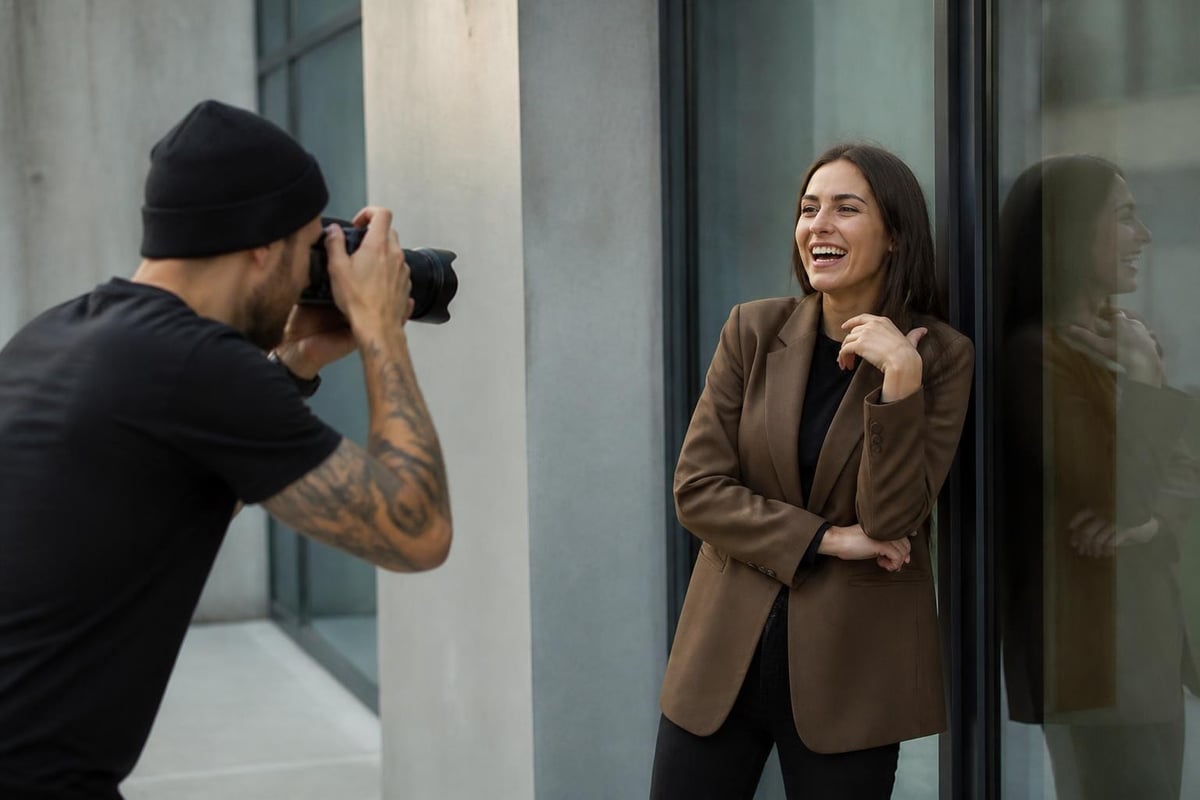
The ability to solve problems in the field includes:
- Adjusting for weather, lighting or access changes
- Working around interruptions or schedule shifts
- Finding better angles or compositions than originally planned
- Managing nervous or camera-shy subjects with professionalism
- Delivering all critical shots even when time is compressed
Business Practice and Professional Standards
Technical and creative excellence means nothing if delivery is unreliable or licensing terms cause problems later. The best photographer operates as a professional business with clear processes, fair contracts, and membership in recognised industry bodies.
Contracts, Licensing and Usage Rights
Professional photographers provide written agreements covering scope, deliverables, timeline, fees and image licensing before work begins. Usage rights matter particularly for commercial photography. You need to know whether you can use images across all channels or whether additional fees apply for certain uses.
The American Photographic Artists provides business resources including licensing guides and contract templates that set industry standards. These frameworks protect both client and photographer by making expectations explicit from the start.
Insurance, Credentials and Ongoing Development
Check that commercial photographers carry public liability insurance and professional indemnity cover. If they're shooting on your site or at your facility, your organisation may require proof of insurance as a condition of access. For specialised work like aerial drone photography, confirm they hold the necessary aviation authority approvals and operator certificates.
The Royal Photographic Society and similar professional bodies set standards for ongoing development, ethics and best practice. While membership alone doesn't guarantee quality, it signals a photographer's commitment to their craft and professional standing within the industry.
Evaluating Photographers for Specific Commercial Needs
Different commercial photography disciplines demand different specialisations. Understanding these distinctions helps you identify the best photographer for your specific project rather than simply hiring someone with "commercial photography" in their profile.
Architectural and Interiors Specialists
Architectural photography requires technical precision with perspective control, lighting complex spaces, and capturing both overall form and construction details. The best photographer in this field uses tilt-shift lenses to correct converging verticals, understands how to balance ambient and artificial light, and knows when to shoot exteriors for optimal sun angle and cloud cover.
For projects ranging from commercial fit-outs to new construction, architectural specialists document finished work in ways that showcase design intent, material quality and spatial flow. This differs fundamentally from general real estate photography, which prioritises broad appeal over architectural accuracy.
Industrial and Construction Documentation
Construction and industrial work demands both technical capability and practical site awareness. Photographers working in these environments need appropriate safety credentials, the physical ability to work across challenging sites, and understanding of what documentation contractors and project managers actually need.
The best photographer for construction brings both wide-angle capabilities to show site context and macro skills to document processes, materials and finishes at close range. They understand progress documentation schedules and can deliver images that support tender submissions, case studies and project records.
| Photography Discipline | Key Technical Requirements | What Makes Someone "Best" in Category |
|---|---|---|
| Architecture/Interiors | Tilt-shift lenses, lighting complex spaces, perspective control | Portfolio showing varied building types, understanding of design intent, consistent quality across projects |
| Construction/Industrial | Site safety awareness, documentation consistency, wide to macro range | Experience across similar project types, ability to work in active sites, understanding of tender/reporting needs |
| Aged Care/Healthcare | Natural light use, non-disruptive approach, warm authentic tone | Portfolio showing sensitivity with vulnerable subjects, ability to convey atmosphere and care quality |
| Corporate/Workplace | Natural portrait lighting, team consistency, efficient shooting | Fast setup, ability to direct mixed groups, consistent results across large teams |
Aged Care, Healthcare and Sensitive Environments
Photography in aged care and healthcare settings requires both technical skill and interpersonal sensitivity. The best photographer in this space creates warm, reassuring imagery while respecting residents, patients and staff privacy and dignity. They work unobtrusively, obtain appropriate permissions, and understand which moments communicate care quality to prospective residents and their families.
This work cannot be rushed or staged. It requires genuine interest in people and the ability to capture authentic interactions that build trust with viewers. For organisations trying to stand out in competitive aged care and healthcare sectors, photography that conveys genuine warmth and credibility makes a measurable difference to enquiry quality and conversion.

The Economics of Hiring the Best Photographer
Photography pricing varies dramatically, and the cheapest option rarely delivers the best value. Understanding what drives costs helps you evaluate whether a photographer's fees represent fair value or whether you're paying for brand positioning rather than capability.
What You're Actually Paying For
Professional photography fees cover far more than the hours spent shooting. The best photographer invests time in pre-production planning, location scouting, equipment maintenance and ongoing professional development. They carry insurance, pay for software licensing, maintain backup systems and allocate time for post-production colour correction and editing.
A realistic fee structure includes:
- Pre-production planning and communication
- Travel time and expenses for location work
- Shooting time on site or in studio
- Post-production editing and colour correction
- File delivery and gallery hosting
- Licensing for agreed usage rights
For organisations needing documentation across multiple sites or ongoing photography support, establishing a relationship with one trusted photographer typically delivers better value and more consistent results than project-by-project tendering with different suppliers.
Long-Term Value vs. Immediate Cost
The cheapest quote rarely represents the best value. Photography that captures your people, spaces and work credibly creates value every time someone views it on your website, in a proposal, or across social media. Poor photography actively damages credibility and can cost you business opportunities worth far more than the fee difference between adequate and excellent photography.
For perspective on balancing artistic vision with commercial requirements, Harvard’s photography scholarship series explores how photographic meaning and value develop over time. While focused on fine art and documentary contexts, the principles of lasting visual impact apply equally to commercial work.
Finding Your Best Photographer in Sydney and Beyond
With thousands of photographers operating across Sydney and regional areas, narrowing your search requires a systematic approach. Start with specialisation, then evaluate technical consistency, business practice and working style.
Referrals and Industry Networks
The most reliable path to finding the best photographer for commercial work starts with referrals from organisations with similar needs. Ask colleagues in your industry who they've used for photography and whether they'd hire them again. Specific recommendations based on actual experience carry more weight than online reviews, which can be manipulated or may not reflect work similar to what you need.
Professional associations and industry groups often maintain directories of specialist photographers. While these shouldn't be your only search tool, they provide a quality filter by confirming the photographer operates as a legitimate business with appropriate credentials and professional standing.
Testing the Working Relationship
Before committing to a large project, consider starting with a smaller scope to test the working relationship. The best photographer for your organisation isn't just technically excellent; they communicate clearly, deliver on time, respond to feedback constructively, and make the process straightforward rather than stressful.
You can explore portfolios and approaches from specialists like Matt Vas Photography, whose commercial and corporate photography work demonstrates the consistency, subject knowledge and business understanding that separates adequate from exceptional results across aged care, construction, architecture, education and corporate sectors throughout Sydney.
Finding the best photographer comes down to matching specialisation with your specific needs, then evaluating consistency, process and business practice. Whether you need aged care photography that reassures families, construction documentation that supports tenders, or workplace imagery that makes your team look credible, the right photographer combines technical mastery with genuine understanding of what your business needs to achieve. Matt Vas Photography brings over 25 years of commercial photography experience across North Sydney and beyond, working with organisations from National Acoustic Laboratories to Keller to deliver imagery that serves real business goals.